
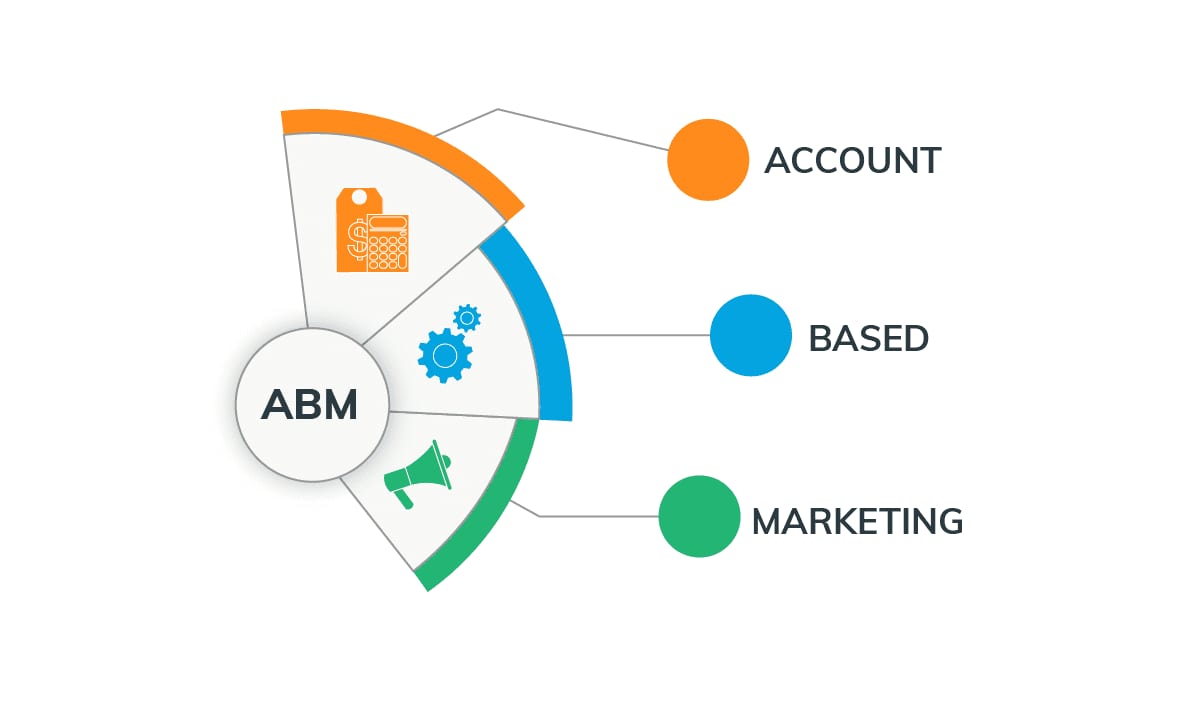
In a competitive B2B market, not every prospect is equal — and not every lead deserves the same time and effort. Traditional marketing often focuses on generating more leads, but Account Based Marketing (ABM) focuses on generating the right leads.
ABM is a high-precision, high-impact approach where marketing and sales work together to target and convert a curated list of high-value accounts. Instead of marketing to everyone, you market to the businesses most valuable to your company.
This Account Based Marketing (ABM) strategy guide will walk you through the foundational steps, tools, and tactics to run an effective ABM program.
What Is Account Based Marketing (ABM)?
Account Based Marketing is a B2B marketing strategy that focuses on identifying high-value accounts and delivering personalized content and campaigns designed specifically for them.
Instead of broad outreach, ABM answers one question:
“Which companies are most likely to generate the highest ROI — and how do we win them?”
Why ABM Works
ABM helps companies:
✅ Attract high-value clients
✅ Improve marketing efficiency
✅ Align sales and marketing teams
✅ Increase deal sizes
✅ Shorten sales cycles
✅ Build stronger business relationships
ABM turns cold outreach into strategic warm engagement.
How to Build a Successful ABM Strategy
1. Align Marketing & Sales Teams
ABM succeeds only when sales and marketing move together.
Agree on:
-
Ideal target accounts
-
Messaging and content
-
Campaign plan
-
Success metrics
Shared goals = stronger execution.
2. Define Your Ideal Customer Profile (ICP)
Identify what a perfect client looks like.
Consider:
-
Industry
-
Company revenue
-
Employee size
-
Budget & buyer intent
-
Tech stack
-
Pain points
This ensures you’re targeting profitable, relevant accounts.
3. Build a Target Account List
Once you have an ICP, build a list of top prospects.
Use tools like:
-
LinkedIn Sales Navigator
-
ZoomInfo
-
Apollo
-
Clearbit
Start small — 25 to 100 key accounts.
4. Research Each Target Account
ABM is all about personalization.
Research:
-
Key decision makers
-
Their challenges
-
Goals & market environment
-
Recent news, funding, or expansion
-
Leadership priorities
The deeper the insight, the stronger your strategy.
5. Personalize Your Messaging & Content
Tailor communication for each account or segment.
Examples:
-
Personalized emails
-
Industry-specific landing pages
-
Customized case studies
-
Executive outreach messages
-
Personalized video messages
ABM = no generic content.
6. Choose Multi-Channel Outreach Tactics
Use multiple touchpoints to connect:
Targeted email campaigns
LinkedIn outreach & ads
Account-specific landing pages
Personalized video messages
Industry-relevant content
Sales calls + demos
High-value direct mail (optional)
Where your accounts exist — you should exist too.
7. Use ABM Technology & Automation Tools
Popular ABM tools include:
-
HubSpot ABM tools
-
Demandbase
-
Terminus
-
6sense
-
Salesforce ABM features
-
RollWorks
These tools help automate targeting, tracking, and personalization.
8. Track & Optimize ABM Performance
Measure success using ABM metrics:
📌 Account engagement
📌 Demo / meeting bookings
📌 Pipeline growth
📌 Deal close rate
📌 Average contract value (ACV)
📌 Sales cycle length
ABM improves with continuous refinement.
ABM Tiers Explained
| Tier | Focus | Personalization | Best For |
|---|---|---|---|
| Tier 1 | 1:1 Accounts | Fully personalized | Enterprise clients |
| Tier 2 | 1:Few Accounts | Segmented personalization | Mid-market |
| Tier 3 | 1:Many | Light personalization | Startups & scaling |
Start with Tier 2 or Tier 3, then scale into Tier 1 as you grow.
Final Thoughts
ABM is not just a marketing strategy — it’s a growth mindset. Instead of chasing thousands of leads, focus on the key accounts that can deliver the biggest revenue. When executed well, ABM builds deeper relationships, stronger pipelines, and long-term enterprise success.
Start small, measure results, optimize — and scale with confidence.