
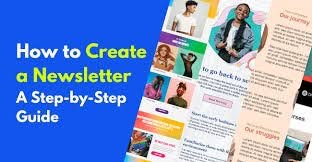
Creating great email newsletters is essential for any business or brand aiming to maintain customer relationships, drive conversions, and build loyalty. In 2025, despite the rise of social media and automation tools, email remains one of the most effective digital marketing channels. But not all newsletters are created equal. To stand out in crowded inboxes, you need strategy, value, and a deep understanding of your audience.
This comprehensive guide explains the art and science behind creating great email newsletters that people actually want to read, share, and act upon.
Why Email Newsletters Still Matter
Before diving into tactics, let’s understand why creating great email newsletters should still be a priority. According to recent data, email marketing yields an average ROI of $42 for every $1 spent. Moreover, newsletters allow you to build a direct relationship with subscribers without depending on algorithms.
Unlike social platforms where visibility can fluctuate, your newsletter lands straight in the user’s inbox—making it a powerful tool to drive repeat engagement.
Define the Goal of Your Newsletter
The first step in creating great email newsletters is identifying your goal. Are you trying to increase website traffic, generate leads, drive sales, or simply share valuable content?
Having a clear goal helps shape your content, design, and call-to-action. For instance, if your goal is to increase sales, your newsletter should include strong product recommendations, limited-time offers, or customer testimonials.
On the other hand, if the goal is to educate, focus on high-value tips, links to blog posts, or expert interviews. Every element of your email should support the primary objective.
Know Your Audience Inside Out
Creating great email newsletters is only possible when you understand your audience’s preferences, behaviors, and pain points. Use tools like Google Analytics, CRM data, and social listening to gather insights.
Segment your list based on demographics, purchase behavior, or interests. This allows you to create personalized newsletters that feel relevant to each subscriber. Personalized emails have a 29% higher open rate and a 41% higher click-through rate than generic ones.
The better you know your audience, the easier it becomes to craft subject lines, content, and CTAs that resonate.
Craft a Compelling Subject Line
Subject lines are the gatekeepers of your newsletter’s success. Even if your content is stellar, a weak subject line can cause your email to be ignored or deleted.
When creating great email newsletters, always spend time crafting subject lines that are:
- Clear and concise (under 50 characters)
- Action-oriented or curiosity-driven
- Personalized with names or interests
- Aligned with the email content
A/B test different subject line styles—questions, emojis, urgency, or humor—to discover what your audience responds to best.
Focus on Clear and Valuable Content
Your subscribers are busy. They’re skimming, not reading. That’s why the content of your newsletter should be scannable, valuable, and easy to digest.
Use headers, bullet points, and short paragraphs to improve readability. Creating great email newsletters means delivering useful content that solves a problem, answers a question, or entertains.
Include links to full blog posts, videos, or downloadable resources so readers can explore further. Make every section of your newsletter count—don’t waste space with fluff.
Design for Mobile First
Over 60% of emails are opened on mobile devices. Therefore, mobile-optimized design is crucial when creating great email newsletters.
Use responsive templates that automatically adjust to screen size. Stick to a single-column layout, ensure text is readable without zooming, and make buttons large enough to tap with a thumb.
Test your newsletter on multiple devices and email clients before sending. A poor mobile experience can lead to unsubscribes or spam complaints.
Use Strong Visual Elements
Visuals are essential in creating great email newsletters that capture attention. Include relevant images, icons, or even short GIFs to break up text and enhance storytelling.
However, balance is key. Don’t overload the email with heavy media files. Compress images to reduce load times and always add alt text for accessibility and better email rendering.
Visual hierarchy also matters. Use typography, spacing, and color to guide the reader’s eye toward the most important elements, like your CTA.
Master the Call-to-Action (CTA)
Every newsletter should include a clear, prominent CTA that aligns with your goal. Whether it’s “Read More,” “Buy Now,” or “Join the Webinar,” your CTA should be:
- Action-oriented
- Visually distinct
- Easy to click (especially on mobile)
- Supported by surrounding content
Creating great email newsletters requires you to place the CTA strategically—either at the top, middle, or end—depending on how warm your audience is.
Use A/B testing to experiment with different CTA placements, colors, and wording to find what drives the most engagement.
Optimize Send Timing and Frequency
The timing and frequency of your newsletters can significantly impact performance. Avoid sending too often or too rarely. Striking the right balance helps maintain interest without overwhelming your subscribers.
Use analytics to identify when your audience is most active. In many cases, Tuesday and Thursday mornings show strong engagement rates. But test various times to find your optimal window.
Also, give subscribers control. Let them choose how frequently they receive your emails or the type of content they want to see. Empowering users reduces unsubscribe rates and increases satisfaction.
Monitor Metrics and Improve Continuously
Creating great email newsletters doesn’t stop at sending them. Regularly analyze key performance metrics such as:
- Open Rate
- Click-Through Rate (CTR)
- Conversion Rate
- Unsubscribe Rate
- Bounce Rate
These metrics reveal what’s working and what’s not. Use insights to fine-tune your subject lines, design, or content strategy. Try A/B testing different elements—images, layouts, CTAs—to optimize results over time.
Track performance across segments as well. You might discover that certain content resonates better with a particular group, allowing you to tailor future newsletters accordingly.
Comply with Legal and Ethical Standards
Don’t overlook compliance when creating great email newsletters. Follow anti-spam regulations like GDPR and CAN-SPAM by:
- Getting explicit opt-in consent
- Including a visible unsubscribe link
- Avoiding deceptive subject lines
- Providing a physical mailing address
Respect your audience’s privacy and choices. Not only does this protect you legally, but it also builds trust.
Encourage Sharing and Forwarding
To expand your reach, make it easy for readers to share your newsletter. Add social share buttons and a “forward to a friend” link.
You can even incentivize referrals by offering discounts or bonuses for subscribers who get others to join your list. Creating great email newsletters that go viral requires both valuable content and easy sharing mechanisms.
Final Thoughts
Creating great email newsletters isn’t just about writing content—it’s about crafting an experience that resonates with your audience. By focusing on personalization, design, timing, and clarity, you can build a powerful channel that fosters long-term engagement and loyalty.
In a world saturated with content, only the newsletters that offer real value will survive and thrive. Master these strategies, and your emails won’t just be opened—they’ll be anticipated.